

Gold futures vs gold ETFs: which should you use?
One COMEX gold futures contract controls about $407,000 of gold for a deposit near $21,000, against $40 a year on $10,000 for GLD. How margin, roll costs and tax make the gold price cheaper or dearer to hold each way.
Key points
- A standard COMEX gold contract covers 100 troy ounces, about $407,000 at today's price
- CME's margin estimate is about $20,700 a contract, about 5% of its value, so a 1% gold move swings the deposit by about 20%
- On the year's biggest down day, one contract lost about $32,400, by our calculation
- Gold ETFs cost $10 to $40 a year on $10,000; rolling futures cost about 4.7% a year in one 2026 example
Gold futures are contracts to buy or sell a fixed amount of gold at a set price on a future date, traded on the COMEX exchange in New York. A gold ETF is a share in a fund that owns bars. Both follow the gold price, but futures run on borrowed exposure and expire, while an ETF is owned outright and can be held for decades.
Traders, miners and banks use futures. Most long-term savers use ETFs, the funds ranked on our gold ETFs compared page. The reasons come down to size, leverage, cost and tax.
How a COMEX gold contract works
The benchmark is the COMEX Gold contract, ticker GC, run by CME Group. One contract is 100 troy ounces of gold of at least 995 fineness. The price moves in ticks of 10 cents an ounce, so each tick is worth $10 a contract.
Trading runs nearly around the clock, from Sunday evening to Friday afternoon, with a one-hour break each day. The most traded contract months are February, April, June, August, October and December. Futures are physically delivered: if you still hold a long contract at expiry, you can end up owning 100 ounces in an exchange-approved vault.
Smaller contracts exist for individual traders:
| Contract | Size | Value at about $4,072 an ounce | Settlement |
|---|---|---|---|
| Gold (GC) | 100 oz | about $407,000 | Physical delivery |
| Micro Gold (MGC) | 10 oz | about $40,700 | Physical delivery |
| 1-Ounce Gold (1OZ) | 1 oz | about $4,070 | Cash settled |
| A gold ETF share, GLD | about 0.092 oz | about $373 | Shares you own |
Source: CME contract specifications; values by our calculation at the latest London gold price.
CME launched the 1-ounce contract in January 2025 for retail demand. It is settled in cash against the main contract's price, so nobody takes delivery.
How much margin do you need for gold futures?
Margin is a good-faith deposit, not a down payment. Since January 2026, CME has set gold margins as a percentage of the contract's value. It raised them to 9% in February, when gold swung by hundreds of dollars a day, and has since brought them down: on 5 October 2026, CME's own estimate for one GC contract was about $20,677, about 5% of the contract's value at today's price.
A Micro contract, a tenth of the size, needs roughly a tenth of that, about $2,100. Brokers can ask for more than the exchange minimum. Because you control about 20 times your deposit, a 1% move in gold is roughly a 20% gain or loss on the margin.
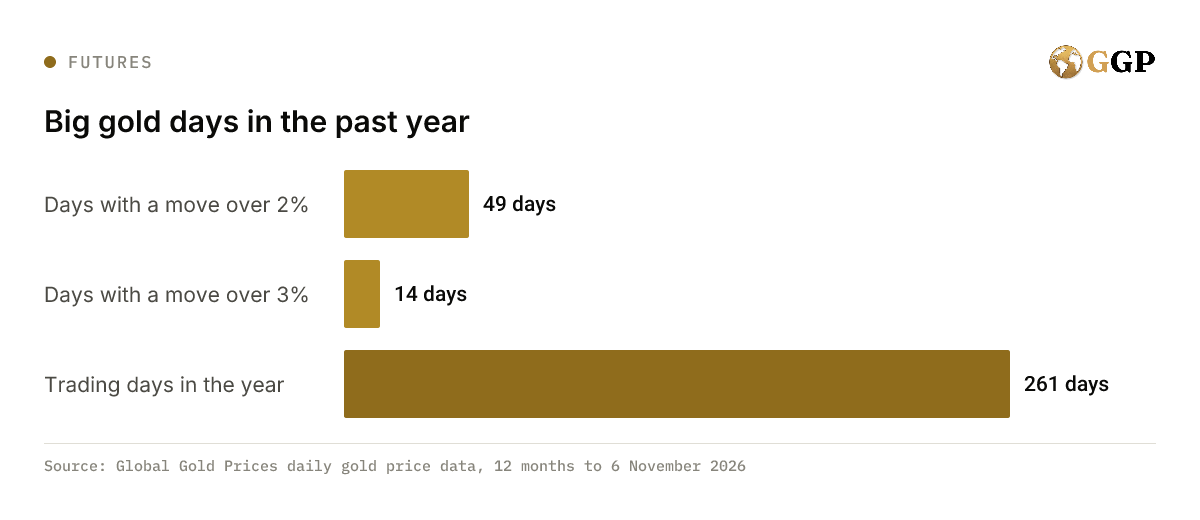
Our price data shows why that matters. Over the past year, gold moved more than 2% in a day on 49 trading days. On its worst day, 2 February 2026, it fell about 6.3%, or about $324 an ounce. That was about $32,400 off one GC contract in a single session, more than one and a half times today's deposit. If losses eat into the account, the broker issues a margin call, and if you do not add cash, it closes the position.
| Item | Value |
|---|---|
| Days with a move over 2% | 49 days |
| Days with a move over 3% | 14 days |
| Trading days in the year | 261 days |
An ETF has no margin unless you borrow to buy it. A GLD share can fall with gold, but it cannot be closed out from under you.
What does it cost to hold futures compared with a gold ETF?
The costs are shaped differently.
ETF fees are a percentage of your holding, taken daily from the fund's gold. SPDR Gold Shares (GLD) charges 0.40% a year, $40 on every $10,000; iShares Gold Trust (IAU) 0.25%, $25; SPDR Gold MiniShares (GLDM) 0.10%, $10.
Futures have no annual fee. You pay a commission each time you buy or sell, often well under $1 a side for Micro contracts at discount brokers, plus small exchange and regulatory fees. The hidden cost is the roll.
Rolling gold contracts: contango and the carry cost
Futures expire, so a long-term holder has to sell the expiring month and buy a later one. Gold contracts usually trade in contango, meaning later months cost more than nearer ones. The gap reflects the cost of carrying gold: interest rates, minus what gold can be lent out for, plus storage.
When interest rates are high, that gap is wide. In one example from July 2026, the spread from the August 2026 contract to June 2027 worked out at about 4.7% a year, according to a dealer's analysis. Holding gold through rolled futures for a year would cost roughly that much, more than ten times the fee on a cheap gold ETF.
There is a reason for it. A futures buyer puts up only the margin and can earn interest on the rest of the money. If cash pays about 4% to 5%, the carry cost is roughly the interest you would have earned anyway. For a fully funded investor, the two routes end up closer than the headline numbers suggest. For someone using leverage, the roll is a real cost.
Backwardation, when nearer months cost more than later ones, is rare in gold and usually signals a squeeze on physical supply.
Gold futures vs gold ETFs: how they are taxed in the US
The tax difference is large, and it often favors futures for gains.
US regulated futures are section 1256 contracts. Gains are marked to market at year end and taxed as 60% long-term and 40% short-term, however long you held them, and reported on IRS Form 6781. For a top-bracket taxpayer that blends to a maximum rate of about 26.8%, by our calculation from the 20% and 37% federal rates.
Physical gold ETFs such as GLD are grantor trusts, which the IRS treats as collectibles. Long-term gains face a top rate of 28%, and gains held a year or less are taxed as ordinary income, at up to 37%. So for a short-term trade, futures can save about ten percentage points of tax. For a long-term holding in a taxable account, the gap shrinks to about one point. Inside an IRA, the ETF's gains are sheltered entirely.
Who uses gold futures, and who uses gold ETFs?
Futures are a professional's tool. The Commodity Futures Trading Commission's weekly Commitments of Traders report splits holders into producers and merchants (miners and refiners hedging output), swap dealers (banks), managed money (hedge funds and commodity trading advisers) and other reportable traders. Hedge funds use futures to bet on gold quickly and with leverage, and they can go short as easily as long. Our report on hedge funds cutting gold longs as ETFs buy shows how the two groups can pull in opposite directions.
ETFs are the saver's route. They suit investors who want to hold gold for years, in a brokerage account or IRA, without margin calls or expiry dates. The cheapest US funds charge 0.09% to 0.10% a year.
Some funds blend the two. A few ETFs hold futures contracts rather than bars, and leveraged gold funds use futures and swaps to deliver twice the daily move. Those funds often send investors a Schedule K-1 at tax time rather than a 1099.
How futures set the gold spot price
COMEX futures are where most of the world's gold price discovery happens during New York hours, alongside the London bullion market's benchmark auctions. The front-month futures price and the spot price you see quoted usually differ by a few dollars, the carry cost for the days left to expiry. Our explainer on how the gold price is set covers how COMEX, the LBMA and the Shanghai Gold Exchange fit together.
Choosing between futures and a gold ETF for gold
- If you want to hold gold for years, a low-fee gold ETF costs less and asks less of you.
- If you trade short swings, want to go short, or need to hedge a business, futures give leverage and a lower tax rate on short-term gains.
- New to futures? The Micro or 1-ounce contracts limit what a bad day can cost.
Margin levels and contract terms change, so check the exchange's current figures before trading. This is general information, not investment or tax advice.
Frequently Asked Questions
+How big is a gold futures contract?
The standard COMEX contract (GC) is 100 troy ounces, worth about $407,000 at a gold price near $4,072. Micro Gold (MGC) is 10 ounces and the cash-settled 1-Ounce Gold contract (1OZ) is a single ounce.
+How much money do you need to trade gold contracts?
You need the initial margin set by CME and your broker. CME's own estimate on 5 October 2026 was about $20,677 for one GC contract, about 5% of its value at today's price; a Micro contract needs roughly a tenth of that, about $2,100. Brokers can ask for more.
+Do I have to take delivery of the gold?
Only if you hold a GC or MGC long position into the delivery period, when you can receive gold in an exchange-approved vault. Most traders close or roll positions before then, and the 1-ounce contract is settled in cash.
+Are gold futures or gold ETFs better for a long-term investor?
For most long-term savers a gold ETF is simpler and cheaper: the lowest fees run about 0.10% a year, $10 on every $10,000. Rolling futures for a year cost about 4.7% in one 2026 example, though a futures buyer can earn interest on the cash not used for margin.
+How are gold futures taxed compared with gold ETFs?
In the US, regulated futures are section 1256 contracts, taxed 60% long-term and 40% short-term and reported on IRS Form 6781. Gains on physical gold ETFs are taxed as collectibles, at up to 28% if held over a year and as ordinary income if not.
More From the Gold Futures Desk
All Gold Futures stories →Related Reading
- Resolute Mining guidance rests on $4,000 gold
Resolute Mining's 2026 guidance assumes a $4,000 gold price, about 3% above Friday's close, though its mines in Mali and Senegal still clear their costs by about $1,380 an ounce on our numbers.
- Gold 2x ETF and 3x funds: how leveraged gold works
Gold rose about 2% over the past year, but a fund resetting to twice the daily move would have lost about 3%, and a 3x fund about 13%, on our price data. Here is why, and which leveraged gold funds trade today.
- Gold ETF India guide: costs, tax and how they compare
Indian gold ETFs charge about 0.44% to 0.81% a year, ₹440 to ₹810 on every ₹1 lakh, with 24 carat gold near ₹12,300 a gram at the world price. How they compare with Sovereign Gold Bonds, gold funds and jewellery.